
2026 Hyundai Tucson Compact SUV: AWD and Safety Systems
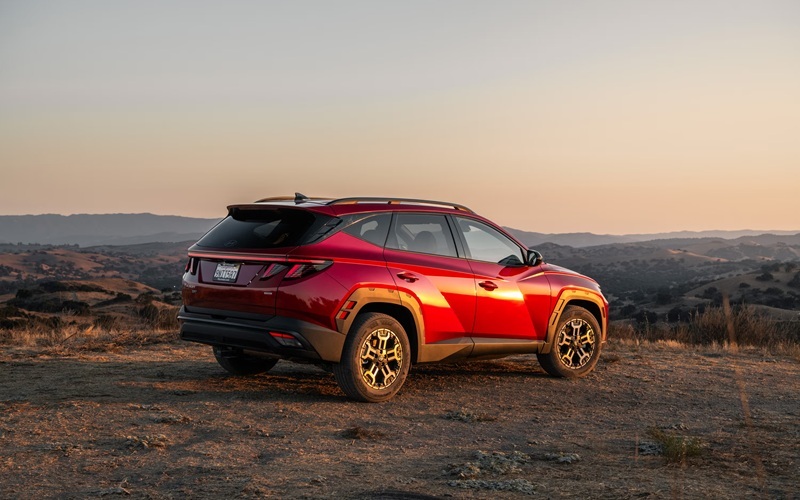
The Hyundai Tucson is a compact sport utility vehicle that offers available all-wheel drive and a wide range of driver assistance technologies. Its platform combines a unibody structure with electronic traction management and integrated safety systems. This article outlines the all-wheel-drive configuration, drivetrain layout, chassis features, and active safety technologies available on current Tucson models.
Platform and Chassis Structure
The Tucson uses a unibody platform. In this design:
The body and frame form a single structural unit
Suspension components mount to reinforced subframes
Structural rigidity supports stability and occupant protection
The chassis includes front and rear crumple zones designed to absorb impact energy. High-strength steel forms a large portion of the body structure.
This construction supports:
Controlled handling
Efficient space utilization
Integrated safety system calibration
Available HTRAC All-Wheel Drive System
The Tucson offers the Hyundai HTRAC all-wheel-drive system on select trims.
HTRAC uses:
Electronically controlled multi-plate clutch
Variable torque distribution between front and rear axles
Automatic response to wheel slip
Under normal driving conditions, most of the torque goes to the front wheels. When traction loss occurs, the system transfers power to the rear axle.
This process operates automatically without manual 4WD selection.
AWD Lock Mode
Models equipped with HTRAC include an AWD lock function.
When activated:
Torque distribution splits more evenly between front and rear axles
The system maintains this balance at lower speeds
AWD lock supports traction on:
Snow-covered surfaces
Loose gravel
Mud
The system automatically disengages lock mode at speeds above a certain threshold.
Drive Mode Selection
The Tucson includes drive modes that adjust drivetrain and steering characteristics.
Available modes may include:
Normal
Sport
Smart
Snow (on AWD models)
Drive mode selection influences:
Throttle response
Transmission shift pattern
Steering assist level
AWD torque distribution (when equipped)
The Smart mode adapts to driver input and road conditions.
Suspension Layout
The Tucson uses a fully independent suspension.
Front Suspension
MacPherson strut design
Coil springs
Stabilizer bar
Rear Suspension
Multi-link design
Coil springs
Stabilizer bar
The multi-link rear suspension supports ride comfort and stable cornering behaviour.
Ground clearance varies by trim level and drivetrain configuration.
Steering and Brake Systems
The Tucson uses electric power-assisted steering.
This system allows:
Variable steering assist
Integration with driver assistance technologies
The brake system includes:
Four-wheel disc brakes
Anti-lock braking system (ABS)
Electronic stability control
Brake-based traction control supports grip when wheel slip occurs.
Hyundai SmartSense Safety Suite
The Tucson includes Hyundai SmartSense, a group of driver assistance technologies.
Core systems include:
Forward Collision-Avoidance Assist
Lane Keeping Assist
Lane Following Assist
Driver Attention Warning
Blind-Spot Collision-Avoidance Assist
Rear Cross-Traffic Collision-Avoidance Assist
These systems use radar sensors, cameras, and electronic control units to monitor vehicle surroundings.
Forward Collision-Avoidance Assist
This system uses a forward-facing camera and radar.
It can:
Detect vehicles ahead
Detect pedestrians
Detect cyclists
If a collision risk appears, the system provides:
Visual and audible warnings
Automatic emergency braking if necessary
Operation depends on speed and environmental conditions.
Lane Keeping and Lane Following Systems
Lane Keeping Assist:
Detects lane markings
Applies steering input if the vehicle drifts
Lane Following Assist:
Helps maintain vehicle position within lane markings
Works at highway speeds
These systems rely on camera detection of lane lines.
Blind-Spot and Rear Cross-Traffic Systems
Blind-Spot Collision-Avoidance Assist monitors adjacent lanes.
When another vehicle enters the blind spot:
A warning appears in the side mirror
Audible alerts activate if the driver signals a lane change
The system can apply braking in certain situations.
Rear Cross-Traffic Collision-Avoidance Assist monitors traffic behind the vehicle during reversing manoeuvres.
It provides:
Warning alerts
Automatic braking if necessary
Adaptive Cruise Control and Highway Assist
Available adaptive cruise control maintains a set speed and distance from the vehicle ahead.
The system can:
Adjust speed automatically
Bring the vehicle to a stop in traffic
Resume movement when traffic flows
Highway Driving Assist integrates:
Adaptive cruise control
Lane Following Assist
This combination supports controlled highway travel under defined conditions.
Parking and Surround-View Systems
Certain trims include camera-based parking assistance.
Available features may include:
Rearview camera
Surround-view monitor
Parking distance warning sensors
The surround-view system uses multiple cameras to create a composite overhead image.
Parking distance sensors detect objects in front of and behind the vehicle.
Airbag and Passive Safety Systems
The Tucson includes multiple airbags, which may include:
Front airbags
Side-impact airbags
Curtain airbags
Seatbelt pretensioners activate during a collision to secure occupants.
The body structure directs impact forces away from the passenger compartment.
Electronic Stability and Traction Integration
Electronic stability control monitors:
Steering angle
Wheel speed
Yaw rate
If instability occurs, the system can:
Reduce engine power
Apply braking to individual wheels
This integration supports vehicle control during emergency manoeuvres.
2026 Hyundai Tucson Questions and Answers
What type of all-wheel-drive system does the 2026 Hyundai Tucson offer?
It offers the HTRAC all-wheel-drive system with an electronically controlled multi-plate clutch.
What does AWD lock mode do?
It distributes torque more evenly between the front and rear axles at lower speeds, improving traction.
What rear suspension design does the Tucson use?
It uses an independent multi-link rear suspension with coil springs.
What system helps prevent frontal collisions?
Forward Collision-Avoidance Assist provides warnings and can apply automatic emergency braking.
What does Highway Driving Assist combine?
It combines adaptive cruise control and Lane Following Assist to support controlled highway travel.
*Disclaimer: Content contained in this post is for informational purposes only and may include features and options from US or internacional models. Please contact the dealership for more information or to confirm vehicle, feature availability.*


