
2026 Hyundai Santa Fe: The Suspension and Steering Systems
The Hyundai Santa Fe uses a suspension and steering system engineered to balance ride comfort, directional stability, load management, and chassis responsiveness. The vehicle combines independent suspension assemblies, electronically assisted steering, and integrated chassis control technologies to maintain handling consistency across urban roads, highways, and light off-road conditions.
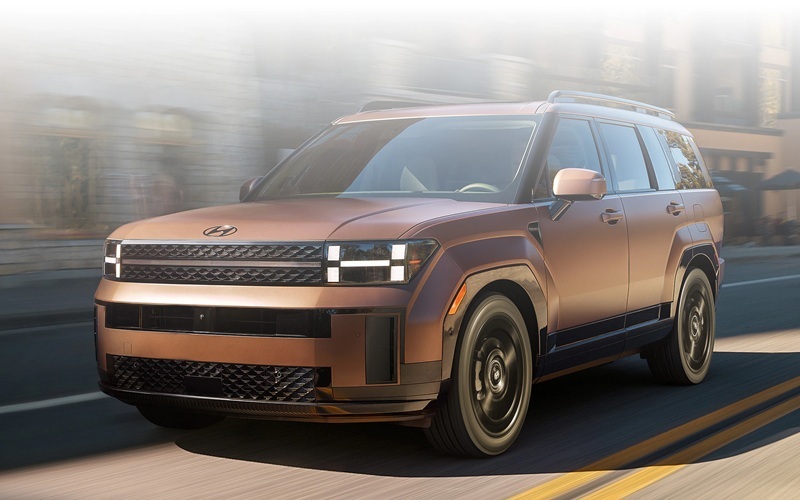
These systems work in concert with traction management, braking controls, and stability systems to improve ride quality, steering precision, and overall vehicle dynamics.
2026 Hyundai Santa Fe Chassis System
The suspension and steering systems in the 2026 Hyundai Santa Fe are part of a unified chassis platform designed to manage vehicle motion, ride comfort, and handling performance.
These systems perform several critical functions:
Support vehicle weight
Absorb road impacts
Maintain wheel alignment
Control body movement
Provide directional steering control
Improve traction and stability
The Santa Fe uses a unibody chassis structure, where the body and frame are integrated into a single load-bearing assembly. This construction method improves structural rigidity while reducing overall mass compared with traditional body-on-frame designs.
Front Suspension System
MacPherson Strut Front Suspension
The front suspension of the Hyundai Santa Fe uses a MacPherson strut independent suspension design.
A MacPherson strut system combines several functions into a compact assembly that includes:
Coil spring
Shock absorber
Upper strut mount
Steering knuckle
Lower control arm
This design allows the suspension and steering systems to operate together efficiently while minimizing packaging space requirements.
Front Suspension Geometry
Suspension geometry is engineered to maintain stable tire contact and predictable steering behaviour.
Key alignment characteristics include:
Camber angle
Toe angle
Caster angle
Steering axis inclination
These parameters influence:
Cornering stability
Tire wear
Steering feel
Vehicle tracking
Braking stability
The front suspension geometry is calibrated to maintain alignment consistency throughout suspension travel.
Lower Control Arm Design
The lower control arms connect the wheel assemblies to the front subframe structure.
The control arms manage:
Vertical wheel movement
Longitudinal forces
Lateral forces
Brake reaction loads
Rubber or hydraulic bushings isolate vibration and reduce harshness transmitted into the cabin.
Rear Suspension System
Multi-Link Rear Suspension
The rear suspension uses an independent multi-link configuration. Independent suspension allows each rear wheel to move separately in response to road surface changes. This improves ride comfort and tire contact consistency.
The rear multi-link system generally includes:
Trailing arms
Lateral links
Upper control links
Coil springs
Dampers
Stabilizer bar
This design provides improved control over wheel movement during acceleration, braking, and cornering.
Rear Suspension Benefits
The multi-link arrangement improves several dynamic characteristics:
Ride isolation
Cornering stability
Suspension articulation
Load distribution
Handling precision
Because wheel movement is controlled independently, uneven road surfaces cause less disturbance to the vehicle's opposite side.
Rear Subframe Integration
The rear suspension components are mounted to a rigid subframe assembly attached to the vehicle structure.
The rear subframe helps:
Improve structural stiffness
Reduce vibration transmission
Maintain suspension alignment accuracy
Improve noise isolation
Flexible mounting points reduce the transfer of road impacts into the passenger compartment.
Springs and Dampers
Coil Spring System
The Santa Fe uses steel coil springs at all four wheel positions. The springs support vehicle weight while permitting controlled vertical suspension movement over road irregularities.
Spring calibration affects:
Ride comfort
Body control
Load capacity
Suspension travel
Handling balance
Different trim levels may use varying spring rates depending on intended vehicle use and wheel configurations.
Shock Absorbers
Shock absorbers, also called dampers, regulate suspension movement by controlling spring oscillation.
The dampers reduce:
Excessive bouncing
Body pitch
Body roll
Suspension rebound
Wheel hop
Hydraulic fluid inside the dampers flows through calibrated internal valves that create resistance during suspension compression and extension.
Frequency-Sensitive Damping
Modern suspension systems may use frequency-sensitive damping technologies. These systems adjust damping characteristics according to suspension movement speed and road surface conditions.
Benefits include:
Improved ride smoothness
Better chassis control
Reduced harshness over rough surfaces
Improved highway stability
Stabilizer Bars and Roll Control
Anti-Roll Bar Function
The front and rear suspension systems include stabilizer bars, also known as anti-roll bars. These components connect the left and right suspension assemblies to reduce body roll during cornering.
As the vehicle leans during a turn:
One suspension side compresses
The stabilizer bar twists
Load transfers across the axle
This reduces excessive body movement.
Roll Control Benefits
Reducing body roll improves:
Steering precision
Tire contact consistency
Passenger comfort
Chassis stability
Driver control
The stabilizer bars are calibrated to balance handling performance with ride comfort.
Steering System Overview
Electric Power-Assisted Steering
The Hyundai Santa Fe uses electric power-assisted steering rather than hydraulic steering assistance. An electric motor mounted within the steering system provides variable steering assistance based on vehicle speed and steering input.
Advantages of electric steering systems include:
Reduced engine load
Lower energy consumption
Variable steering calibration
Reduced maintenance complexity
Improved integration with driver-assistance systems
The steering system is managed electronically through dedicated control modules.
Rack-and-Pinion Steering Design
The steering mechanism uses a rack-and-pinion configuration.
When the driver rotates the steering wheel:
Steering input moves the steering shaft.
The pinion gear rotates.
The steering rack moves laterally.
Tie rods transfer movement to the front wheels.
The electric motor assists steering effort according to operating conditions.
Variable Steering Assistance
Steering assistance varies with vehicle speed.
At lower speeds:
Steering effort decreases
Maneuverability improves
Parking requires less physical force
At higher speeds:
Steering assistance decreases
Steering feel becomes firmer
Straight-line stability improves
This variable calibration improves both comfort and directional control.
Steering and Stability System Integration
Electronic Stability Control Coordination
The steering system communicates continuously with the vehicle’s electronic stability systems.
The control network monitors:
Steering angle
Wheel speed
Vehicle yaw rate
Lateral acceleration
Brake input
These systems coordinate automatically to maintain vehicle stability during emergency maneuvers or low-traction conditions.
Torque Vectoring Assistance
Certain Santa Fe configurations may include brake-based torque vectoring functions. Torque vectoring systems selectively apply braking force to individual wheels during cornering to improve turning response and reduce understeer.
This improves:
Cornering precision
Vehicle balance
Traction distribution
Steering stability
Lane-Centering Integration
Electric steering systems can also support advanced driver-assistance technologies such as:
Lane-keeping assistance
Lane-centering systems
Highway driving assistance
These systems use steering motor inputs to assist directional control under specific operating conditions.
Drive Mode and Terrain Management
Selectable Drive Modes
The Santa Fe may offer selectable drive modes that electronically adjust steering and suspension characteristics.
Drive modes can influence:
Steering effort
Throttle response
Transmission behavior
Stability control sensitivity
All-wheel-drive torque distribution
Common modes may include:
Eco
Normal
Sport
Snow
Terrain settings
Terrain Response Integration
All-wheel-drive configurations may coordinate steering and traction systems during low-grip operation.
The chassis management system adjusts vehicle behaviour to improve stability on:
Snow
Gravel
Wet pavement
Uneven terrain
The steering calibration may also adapt to improve directional consistency.
Ride Comfort and Noise Isolation
Vibration Isolation
Suspension mounting systems use bushings and isolators to reduce vibration transfer.
These components absorb:
Tire vibration
Road impacts
Suspension movement
Steering oscillation
Reducing vibration improves occupant comfort and cabin refinement.
Cabin Noise Reduction
The suspension system also contributes to noise reduction.
Subframe isolation, damper tuning, and chassis rigidity help minimize:
Road noise
Suspension impact noise
Tire resonance
Structural vibration
The overall chassis system is engineered to enhance ride refinement in both highway and urban driving.
Chassis Monitoring and Diagnostics
Electronic Sensor Systems
The steering and stability systems rely on multiple sensors throughout the chassis platform.
These sensors include:
Steering angle sensors
Wheel-speed sensors
Yaw sensors
Acceleration sensors
The control modules process this information continuously.
Diagnostic Functions
The onboard diagnostic system can detect faults involving:
Steering motor operation
Stability control communication
Steering calibration
Sensor functionality
Electronic chassis systems
Diagnostic information is stored electronically for service analysis.
2026 Hyundai Santa Fe FAQ
What type of front suspension does the 2026 Hyundai Santa Fe use?
The vehicle uses a MacPherson strut independent front suspension with coil springs and hydraulic dampers.
Does the Santa Fe use independent rear suspension?
Yes. The rear suspension uses an independent multi-link configuration designed for ride comfort and handling stability.
What steering system does the 2026 Hyundai Santa Fe use?
It uses electric power-assisted rack-and-pinion steering with electronically controlled levels of assistance.
How does the steering system change at different speeds?
The steering system provides lighter assistance at low speeds for easier maneuvering and firmer steering feel at higher speeds for improved stability.
Can the suspension and steering systems interact with drive modes?
Yes. Selectable drive modes may modify steering response, traction management behaviour, and overall chassis calibration depending on operating conditions.
*Disclaimer: Content contained in this post is for informational purposes only and may include features and options from US or internacional models. Please contact the dealership for more information or to confirm vehicle, feature availability.*


