
2026 Hyundai Santa Fe: How Does the Drive Train Work?
The drivetrain is one of the most important mechanical systems in any vehicle because it transfers power from the engine to the wheels. Without an effective drivetrain, the engine’s mechanical energy could not be converted into vehicle motion. In modern sport utility vehicles, drivetrain systems not only deliver power efficiently but also maintain stability, traction, and durability across different driving environments.
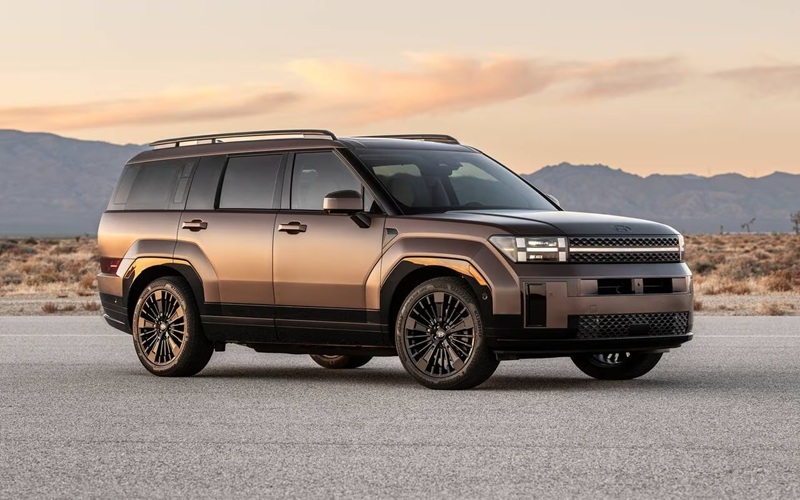
Vehicles such as the Hyundai Santa Fe must operate reliably under a wide range of conditions. Urban driving, highway travel, wet pavement, snow-covered roads, and uneven terrain all require different traction and torque distribution characteristics. To address these challenges, modern SUVs incorporate advanced drivetrain architectures that combine mechanical components with electronic control systems.
The new Hyundai Santa Fe uses a drivetrain system designed to deliver efficient power transfer while maintaining traction and stability. Depending on the configuration, the system may operate in a front-wheel-drive layout or as an all-wheel-drive system that distributes torque between the front and rear axles. These systems rely on multiple components working together, including transmissions, driveshafts, differentials, electronic traction control systems, and torque distribution systems.
2026 Hyundai Santa Fe Drivetrain System
Purpose of the Drivetrain
The drivetrain connects the engine to the wheels and manages how power is delivered to propel the vehicle forward. The engine generates rotational force, known as torque, which must pass through several components before reaching the wheels.
These components modify torque levels, distribute power across axles, and allow wheels to rotate at different speeds during turns. Without these functions, the vehicle would not be able to accelerate smoothly or maintain stability while cornering.
Main Drivetrain Components
The drivetrain in the Hyundai Santa Fe includes several key mechanical systems:
Transmission
Driveshafts
Differentials
Axles
Electronic traction management systems
These components form a continuous pathway that transfers power from the engine to the wheels.
Transmission System
Role of the Transmission
The transmission converts engine power into usable torque levels for driving. It adjusts gear ratios so the engine can operate efficiently at different vehicle speeds.
Lower gears provide increased torque for acceleration or climbing hills, while higher gears allow the vehicle to travel efficiently at highway speeds.
Automatic transmissions use planetary gear systems and hydraulic or electronic controls to change gear ratios automatically.
Integration With the Drivetrain
The output shaft of the transmission sends torque to the rest of the drivetrain. In front-wheel-drive configurations, this power is sent directly to the front differential and front wheels.
In all-wheel-drive configurations, the transmission connects to additional drivetrain components that distribute torque to both axles.
Front-Wheel-Drive Configuration
Power Flow to the Front Wheels
In front-wheel-drive models of the Hyundai Santa Fe, the engine and transmission are mounted at the front of the vehicle. The transmission delivers torque directly to the front differential.
The differential then distributes torque between the left and right front wheels.
This configuration reduces drivetrain complexity and can improve fuel efficiency because fewer mechanical components are required.
Advantages of Front-Wheel Drive
Front-wheel drive offers several advantages in everyday driving conditions. Because the engine weight is above the driven wheels, traction can be improved on slippery surfaces.
This configuration also allows more efficient packaging of drivetrain components within the vehicle structure.
All-Wheel-Drive System
Torque Distribution Between Axles
All-wheel-drive versions of the Hyundai Santa Fe include additional components that deliver torque to both the front and rear wheels.
A coupling system or transfer mechanism directs a portion of engine torque to the rear driveshaft. This driveshaft transfers power to the rear differential, which distributes torque to the rear wheels.
The system can dynamically adjust torque distribution based on traction conditions.
Electronic Control of Torque
Sensors throughout the vehicle monitor wheel speed, steering angle, throttle input, and vehicle stability.
Using this information, the control system determines when additional traction is required and adjusts torque distribution accordingly.
Driveshaft and Axle Operation
Driveshaft Function
In all-wheel-drive configurations, the driveshaft transfers torque from the front axle to the rear axle.
Driveshafts must accommodate suspension movement and changes in drivetrain angle as the vehicle travels over uneven surfaces.
Universal joints allow the driveshaft to rotate smoothly, even when the angles between drivetrain components change.
Axle Shafts
Axles connect the differential to the wheels. Each axle shaft transfers torque directly to a wheel hub.
Because wheels move vertically as the suspension compresses and extends, axle shafts include constant-velocity joints that allow them to transmit torque smoothly while changing angle.
Differential Systems
Purpose of Differentials
Differentials allow wheels on the same axle to rotate at different speeds. This is necessary because the outer wheels travel a longer distance than the inner wheels during a turn.
Without a differential, the wheels would be forced to rotate at the same speed, which would cause drivetrain stress and reduce handling stability.
Front and Rear Differentials
Front-wheel-drive models use a front differential that distributes torque between the front wheels.
All-wheel-drive versions include both a front and rear differential. Each differential manages torque distribution between the left and right wheels on its respective axle.
Traction and Stability Control Systems
Traction Control
Traction control systems monitor wheel rotation using sensors located at each wheel.
If one wheel begins to spin faster than the others due to reduced traction, the system detects the difference and intervenes.
The system may reduce engine power or apply braking to the spinning wheel, redirecting torque to wheels with better traction.
Electronic Stability Control
Electronic stability control helps maintain directional stability when the vehicle begins to slide or deviate from the intended path.
Sensors measure steering angle, lateral acceleration, and yaw rate to determine whether the vehicle is moving as expected.
If instability is detected, the system can apply braking to individual wheels and adjust engine power.
Torque Flow Through the Drivetrain
Step-by-Step Torque Transfer
The movement of torque through the drivetrain follows several stages:
The engine generates rotational power.
The transmission adjusts gear ratios and outputs torque.
Torque travels to the front differential or transfer mechanism.
Driveshafts deliver torque to the rear axle in all-wheel-drive models.
Differentials distribute torque between left and right wheels.
Wheels convert torque into motion through traction with the road.
Each stage ensures that power is delivered efficiently and smoothly.
Adaptation to Driving Conditions
The drivetrain continuously adapts to changing conditions. For example, when driving on wet or icy surfaces, traction control and torque distribution systems work together to prevent wheel slip.
In situations where one wheel loses traction, torque can be redirected to wheels with greater grip.
Durability and Mechanical Design
Strength of Drivetrain Components
SUV drivetrains must withstand significant forces, particularly when carrying passengers or cargo. Components such as gears, shafts, and bearings are engineered to handle these loads.
Durability testing ensures that drivetrain components can withstand long-term use without excessive wear.
Lubrication Systems
Drivetrain components rely on specialized lubricants to reduce friction between moving parts.
Differentials and transmissions contain lubricating fluids that help maintain smooth operation and dissipate heat generated during operation.
Proper lubrication is essential for the long-term reliability of drivetrain systems.
2026 Hyundai Santa Fe FAQ
What is the purpose of the drivetrain in the 2026 Hyundai Santa Fe?
The drivetrain transfers engine power to the wheels and manages torque distribution to maintain vehicle motion and traction.
Does the Santa Fe use front-wheel drive or all-wheel drive?
The vehicle is available with either front-wheel drive or all-wheel drive, which distributes torque between the front and rear wheels.
What role does the transmission play in the drivetrain?
The transmission adjusts gear ratios so the engine can deliver appropriate torque levels for acceleration, climbing, and cruising.
Why are differentials necessary in the drivetrain?
Differentials allow wheels on the same axle to rotate at different speeds during turns while still receiving engine power.
How does the drivetrain help maintain traction?
Electronic traction control and torque distribution systems detect wheel slip and adjust power delivery to the wheels with the most grip.
*Disclaimer: Content contained in this post is for informational purposes only and may include features and options from US or internacional models. Please contact the dealership for more information or to confirm vehicle, feature availability.*


