
2026 Hyundai Kona Compact SUV: Hybrid and Electric Options
The Hyundai Kona is a compact sport utility vehicle that offers electrified powertrain options alongside conventional gasoline models. Buyers can choose between a hybrid configuration and a fully electric version, depending on driving needs and charging access.
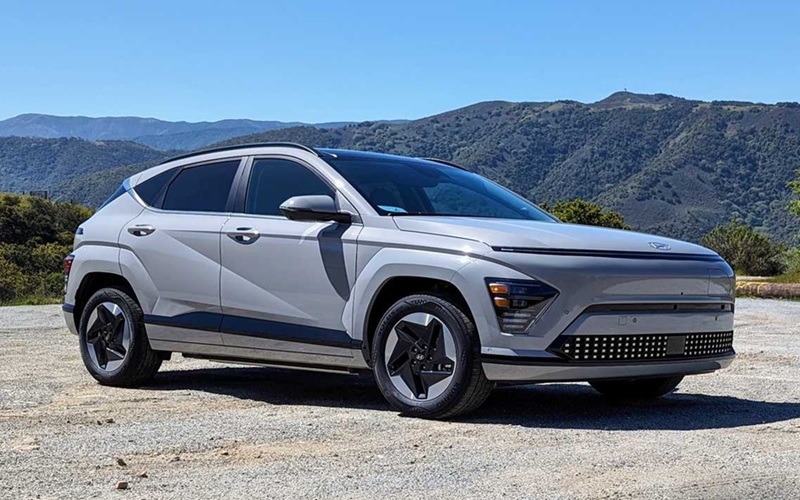
Platform and Powertrain Architecture
The Kona uses a modern unibody platform designed to accommodate multiple powertrain types.
Key layout characteristics include:
Transverse engine placement for hybrid models
Front-mounted electric motor for electric models
Front-wheel drive configuration for electrified versions
Integrated battery placement beneath the floor
Battery placement under the cabin floor supports:
Balanced weight distribution
Preserved passenger space
Lower centre of gravity
This platform allows Hyundai to offer both hybrid and electric configurations within the same model line.
Kona Hybrid System
The Kona Hybrid combines a gasoline engine with an electric motor to reduce fuel consumption and emissions.
Hybrid system components include:
1.6 L Atkinson-cycle four-cylinder gasoline engine
Permanent magnet electric motor
Lithium-ion polymer battery
6-speed dual-clutch automatic transmission
The gasoline engine and electric motor operate together or independently, depending on driving conditions.
Hybrid Battery and Energy Flow
The hybrid battery stores energy generated through:
Regenerative braking
Engine-driven charging
The lithium-ion polymer battery supports:
Electric assistance during acceleration
Electric-only operation at low speeds under light load
The hybrid system automatically manages energy flow. No external charging is required.
Energy flow information appears in the digital instrument display.
Hybrid Fuel Consumption
Fuel consumption for the Kona Hybrid remains lower than conventional gasoline-only versions.
Typical combined fuel consumption ratings are approximately:
4.5 to 5.0 L/100 km, depending on trim and wheel size
Actual fuel use depends on driving style, traffic, and environmental conditions.
Regenerative braking supports efficiency by capturing kinetic energy during deceleration.
Kona Electric Powertrain
The Kona Electric is a fully battery-electric vehicle.
Key drivetrain components include:
Single electric motor
High-voltage lithium-ion battery pack
Single-speed reduction gear transmission
The electric motor delivers instant torque to the front wheels.
There is no gasoline engine in the electric version.
Battery Capacity Options
The Kona Electric offers two battery capacity configurations.
Available options include:
Standard-range battery of approximately 48.4 kWh
Long-range battery of approximately 64.8 kWh
Battery capacity influences total driving range.
The battery pack mounts beneath the floor, contributing to cabin stability and low centre of gravity.
Electric Driving Range
Estimated electric driving range varies by battery size.
Typical estimates are:
Approximately 370 km for the standard-range battery
Approximately 420 to 490 km for the long-range battery, depending on configuration
Range depends on:
Ambient temperature
Driving style
Use of climate control
Road conditions
The vehicle displays remaining range based on current battery charge and recent driving patterns.
Charging Capability
The Kona Electric supports both AC and DC charging.
Level 1 Charging (120 V)
Suitable for overnight home charging
Charging time varies depending on battery size
Level 2 Charging (240 V)
Faster charging compared to Level 1
Full charge typically achieved within several hours
DC Fast Charging
The Kona Electric supports DC fast charging.
Under optimal conditions:
Battery can charge from approximately 10% to 80% in about 40 to 45 minutes
Charging time depends on charger output and battery temperature.
The charging port is located at the front of the vehicle.
Regenerative Braking System
The Kona Electric and Hybrid both include regenerative braking.
This system:
Converts kinetic energy into electrical energy
Recharges the battery during deceleration
Reduces reliance on friction brakes
The Kona Electric includes adjustable regenerative braking levels controlled via steering-wheel paddles.
Higher regeneration levels increase deceleration when the driver releases the accelerator.
Drive Modes and Energy Management
Both hybrid and electric versions include selectable drive modes.
Available modes may include:
Eco
Normal
Sport
Drive mode selection adjusts:
Throttle response
Steering assist
Regenerative braking behaviour
In electric models, Eco mode limits power output to extend driving range.
Interior Technology and Energy Display
Electrified Kona models include digital displays that show:
Battery charge level
Energy flow between the motor and the battery
Driving efficiency statistics
Estimated remaining range
The infotainment system integrates with navigation to calculate route-based range estimates when destination input is active.
Climate control systems can precondition the cabin while the vehicle remains plugged in, which supports energy efficiency at departure.
Maintenance and System Protection
Hybrid and electric powertrains require different maintenance compared to gasoline-only vehicles.
Hybrid models still require:
Engine oil changes
Filter replacement
Electric models eliminate:
Engine oil maintenance
Fuel system service
High-voltage components include protective shielding and battery management systems designed for durability and safety.
2026 Kona Questions and Answers
What engine does the Kona Hybrid use?
It uses a 1.6 L Atkinson-cycle four-cylinder gasoline engine combined with an electric motor.
Does the Kona Hybrid require external charging?
No. The hybrid battery charges through regenerative braking and engine-driven generation.
What battery sizes are available in the Kona Electric?
It offers approximately 48.4 kWh and 64.8 kWh battery options.
What is the estimated charging time from 10% to 80% using DC fast charging?
Under optimal conditions, it takes about 40 to 45 minutes.
How does regenerative braking function in the Kona Electric?
It converts kinetic energy during deceleration into electrical energy to recharge the battery.
*Disclaimer: Content contained in this post is for informational purposes only and may include features and options from US or internacional models. Please contact the dealership for more information or to confirm vehicle, feature availability.*


