
2026 Hyundai Elantra: Engine Efficiency and Fuel Consumption
The Hyundai Elantra is a compact sedan that offers gasoline and hybrid powertrain options. Its engine lineup supports daily commuting, highway travel, and efficiency-focused driving. Fuel consumption varies depending on engine type, transmission, and driving conditions. This article outlines the available engines, transmission systems, hybrid configuration, and fuel use ratings for current Elantra models.
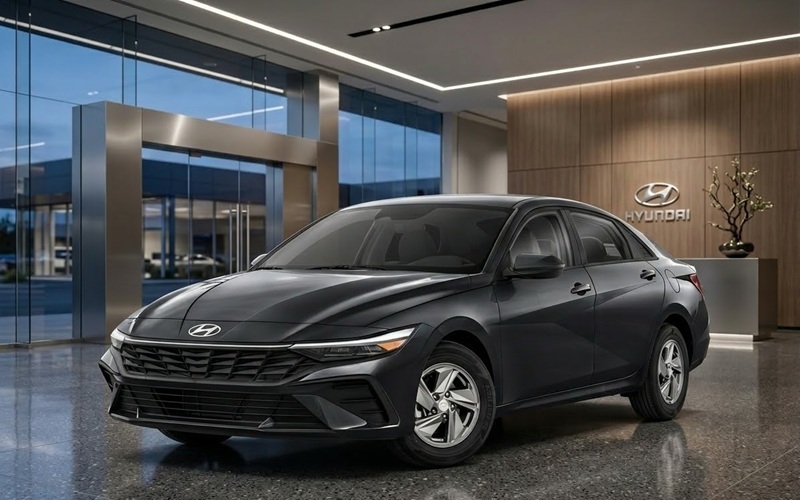
Platform and Drivetrain Layout
The Elantra uses a front-wheel-drive layout.
Key characteristics include:
Transverse engine placement
Front-wheel drive configuration
Independent front suspension
Rear suspension design that varies by trim
This layout supports predictable handling and efficient power delivery.
Most trims use a continuously variable transmission (CVT), while certain performance-oriented trims use a dual-clutch automatic transmission.
2.0 L Four-Cylinder Engine
The standard engine in the Elantra is a 2.0 L naturally aspirated four-cylinder gasoline engine.
Key features include:
Multi-port fuel injection
Dual overhead camshaft design
Paired with an intelligent variable transmission (IVT), the Hyundai version of a CVT
This engine balances power output and fuel efficiency for daily use.
Fuel Consumption Ratings
With the 2.0 L engine and IVT, typical fuel consumption ratings are approximately:
7.6 L/100 km in city driving
5.7 L/100 km on the highway
6.7 L/100 km combined
Actual fuel use depends on driving style, weather conditions, and traffic patterns.
1.6 L Turbocharged Engine (N Line)
The Elantra N Line trim includes a 1.6 L turbocharged four-cylinder engine.
Key features include:
Turbocharger for increased air intake pressure
Gasoline direct injection
7-speed dual-clutch automatic transmission
This engine provides higher power output compared to the standard 2.0 L engine.
Fuel Consumption Ratings for 1.6 L Turbo
Typical fuel consumption ratings for the N Line configuration are approximately:
8.4 L/100 km in city driving
6.6 L/100 km on the highway
7.6 L/100 km combined
Fuel use increases compared to the naturally aspirated engine due to higher performance output.
Elantra Hybrid Powertrain
The Elantra Hybrid combines a gasoline engine with an electric motor.
Hybrid system components include:
1.6 L Atkinson-cycle four-cylinder gasoline engine
Permanent magnet electric motor
Lithium-ion polymer battery
6-speed dual-clutch automatic transmission
The electric motor assists during acceleration and low-speed driving. The system automatically switches between electric and gasoline power based on demand.
Hybrid Fuel Consumption Ratings
The Elantra Hybrid offers lower fuel consumption compared to gasoline-only models.
Typical ratings are approximately:
4.8 L/100 km in city driving
4.5 L/100 km on the highway
4.7 L/100 km combined
These figures depend on trim level and wheel size.
Regenerative braking captures energy during deceleration and stores it in the battery.
Transmission Systems
Transmission options vary by engine.
Intelligent Variable Transmission (IVT)
The 2.0 L engine pairs with an IVT.
This system:
Adjusts gear ratios continuously
Supports smooth acceleration
Contributes to improved fuel efficiency
Dual-Clutch Transmission (DCT)
The 1.6 L turbo and hybrid models use a 6-speed or 7-speed dual-clutch transmission.
This design:
Uses two clutches for rapid gear changes
Supports responsive acceleration
Maintains mechanical efficiency
Drive Mode Selection
The Elantra may include selectable drive modes depending on trim.
Available modes can include:
Normal
Sport
Smart
Drive mode selection influences:
Throttle response
Transmission shift behaviour
Steering assist
In hybrid models, drive modes may also influence energy use balance between gasoline and electric power.
Fuel Tank Capacity and Range
Fuel tank capacity for gasoline models is approximately 47 litres.
Hybrid models use a similar fuel tank size.
Estimated driving range depends on:
Fuel consumption rating
Driving conditions
Terrain and traffic
Hybrid models typically provide extended driving range due to lower fuel consumption.
Engine Efficiency Technologies
The Elantra uses several technologies to support fuel efficiency.
These may include:
Idle stop-and-go system
Variable valve timing
Lightweight engine components
The hybrid system adds:
Regenerative braking
Electric motor assistance
Battery energy management system
These technologies reduce fuel consumption under typical driving conditions.
Emissions and Environmental Considerations
All engines meet current emissions standards.
The hybrid system reduces tailpipe emissions during electric-only operation.
Idle stop-and-go systems reduce fuel consumption and emissions when the vehicle is stationary.
2026 Hyundai Elantra Maintenance Considerations
Routine maintenance for gasoline engines includes:
Oil and filter changes
Spark plug replacement
Air filter replacement
Hybrid models require similar gasoline engine maintenance plus inspection of hybrid components.
The lithium-ion polymer battery includes protective management systems designed for long-term durability.
Questions and Answers
What is the standard engine in the 2026 Hyundai Elantra?
The standard engine is a 2.0 L naturally aspirated four-cylinder gasoline engine.
What transmission pairs with the 2.0 L engine?
It pairs with an intelligent variable transmission (IVT).
Which engine does the Elantra Hybrid use?
It uses a 1.6 L Atkinson-cycle four-cylinder gasoline engine combined with an electric motor.
What is the approximate combined fuel consumption of the Elantra Hybrid?
The combined fuel consumption is approximately 4.7 L/100 km.
What is the fuel tank capacity of gasoline models?
Fuel tank capacity is approximately 47 litres.
*Disclaimer: Content contained in this post is for informational purposes only and may include features and options from US or internacional models. Please contact the dealership for more information or to confirm vehicle, feature availability.*


